Floral Mandala Vol.7: Maximizing Value in Digital Design Assets
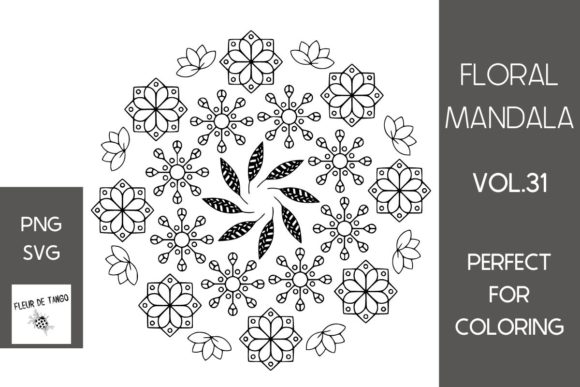
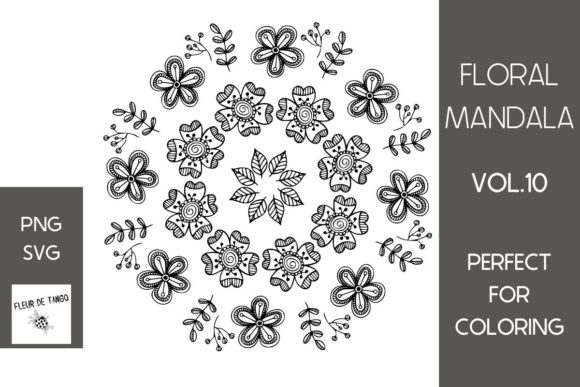
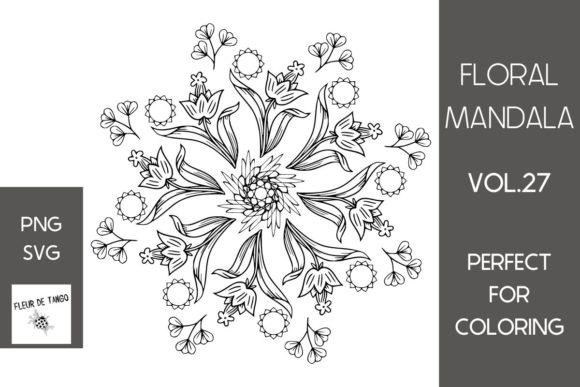
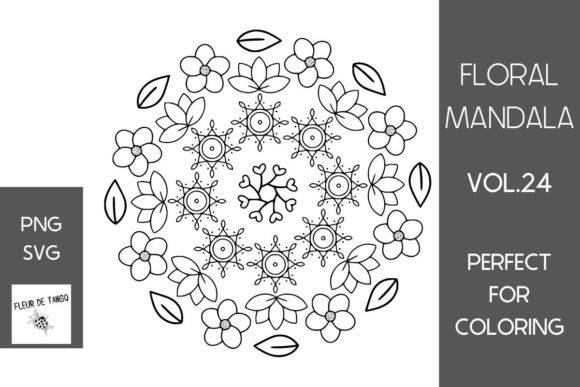
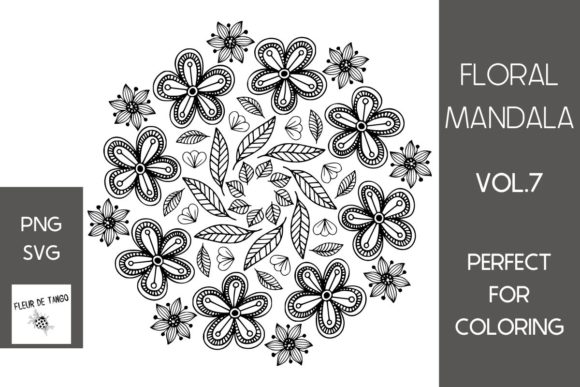
When creators explore digital assets for crafting or publishing, Floral Mandala Vol.7 often stands out due to its intricate balance of botanical elements and geometric precision. This collection is specifically curated for versatility, bridging the gap between physical crafting and digital publishing. Whether you are designing merchandise for an Etsy shop, creating interior wall art, or compiling pages for a KDP coloring book, understanding the technical nuances of this volume is essential. The true value lies not just in the aesthetic appeal, but in correctly utilizing the provided file formats to ensure professional results across different mediums.
Understanding File Formats Beyond the Download Button
A frequent oversight among both beginners and experienced designers is treating all digital files as interchangeable. When you acquire Floral Mandala Vol.7, you receive two distinct formats: one .SVG file and one transparent .PNG file. Assuming these serve identical purposes is a mistake that leads to production errors and wasted materials.
The .SVG (Scalable Vector Graphic) is your primary asset for cutting machines like Cricut and Silhouette. Because it is vector-based, it contains mathematical paths rather than pixels. This allows the machine to read cut lines with absolute precision, regardless of how much you resize the design. A common error occurs when users attempt to cut from the PNG file instead. While the PNG is high-resolution and transparent, it is still a raster image. Cutting machines must trace raster images, which can result in jagged edges, lost details in complex mandala sections, or excessive weeding time due to auto-trace artifacts.
Conversely, the transparent .PNG is optimized for "Print N’ Cut" projects, sublimation, and digital publishing. If you are adding designs to KDP coloring books or creating iron-on transfers where color fidelity matters more than cut paths, the PNG is superior. Using an SVG for direct printing without proper conversion can sometimes lead to rendering issues in standard office software or unexpected line weights. Always match the file type to the specific output method to maintain the integrity of the floral mandala design.
Avoiding Quality Loss in KDP Coloring Books
For entrepreneurs and educators using Floral Mandala Vol.7 to create Amazon KDP coloring books, resolution and margin management are critical. A significant misunderstanding involves assuming that because a file is digital, it will automatically print clearly at any size. While vectors are infinitely scalable, the accompanying PNG has a fixed pixel dimension.
If you stretch the PNG beyond its native resolution to fill a large 8.5 x 11-inch page, the lines may appear pixelated or blurry in print. This directly impacts customer reviews and satisfaction. To avoid this, verify the DPI (dots per inch) before finalizing your book layout. For crisp coloring pages, aim for at least 300 DPI at the final print size. If the included PNG does not meet this requirement at your desired dimensions, utilize the SVG file. Import the SVG into vector software like Adobe Illustrator, Inkscape, or Affinity Designer, and export a new high-resolution PNG or PDF tailored exactly to your book’s trim size.
Additionally, overlook bleed and safe zones at your peril. Intricate mandalas often extend to the edge of the canvas. If you place the design too close to the binding gutter or the outer trim line without accounting for printer shift, vital details may be cropped off. Always leave a sufficient safety margin, typically 0.375 inches for standard KDP paperback interiors, to ensure the full floral pattern remains visible and functional for the end-user.
Navigating Commercial Use and Originality
Creators marketing cards, t-shirts, or wall decals must distinguish between using a design and reselling it. A practical warning for small business owners: never sell the raw SVG or PNG files as standalone digital downloads. This violates standard licensing terms and devalues the asset ecosystem. Instead, integrate Floral Mandala Vol.7 into a unique physical product or a significantly modified digital creation.
Another subtle issue is market saturation. Because these designs are accessible, multiple sellers may use them. To stand out, avoid using the mandala exactly as-is on generic products. Combine the floral elements with custom typography, alter the color palette for sublimation prints, or layer multiple mandalas to create a new composite pattern. This adds unique value and protects your brand identity while remaining compliant with usage rights.
Technical Checks Before Cutting and Printing
Efficiency in production comes from preventative checks. Before sending Floral Mandala Vol.7 to your cutter or printer, perform these specific validations to avoid costly reprints or wasted vinyl:
- Verify Node Count: Highly detailed mandalas can have thousands of nodes. If your cutting machine struggles or pauses frequently, simplify the SVG path using optimization tools within your design software. This reduces processing load without sacrificing visual detail.
- Check Transparency Integrity: Open the PNG in your editing software and place a colored background behind it temporarily. Ensure there are no white boxes or gray halos around the floral edges. True transparency is vital for dark-colored t-shirts and car decals.
- Test Cut Complex Areas: Floral mandalas often feature delicate inner petals. Run a test cut on scrap material at a slower speed and higher blade pressure setting. Rushing through intricate cuts is the most common cause of torn vinyl and failed projects.
- Confirm Color Profile: Screens display RGB color, while printers and cutters often use CMYK or spot colors. If your printed wall decals look dull compared to your screen, convert the file to CMYK before printing to manage expectations and achieve accurate color reproduction.
Evaluating Suitability for Your Specific Project
Not every design in a volume suits every project. Before committing Floral Mandala Vol.7 to a large batch order or publication, assess the complexity relative to your audience. For children’s coloring books, highly dense mandalas may be frustrating rather than relaxing. In such cases, reserve this volume for adult mindfulness books or advanced crafters.
Similarly, consider the application surface. Delicate filigree work in floral mandalas may not adhere well to textured surfaces like canvas tote bags or rough wood. For these substrates, choose bolder variations within the collection or adjust the stroke width in the SVG file to increase durability. Matching the design weight to the physical medium prevents peeling decals and poor transfer results.
Finally, remember that downloaded files will not include watermarks. Some users mistakenly believe faint lines in their preview are part of the design and spend hours trying to remove them, or conversely, they assume the clean download is a low-quality preview. Trust the file delivery system; the clean, watermark-free assets you receive are the production-ready master files. By respecting the technical specifications and applying these practical corrections, you transform a simple digital download into a reliable foundation for professional creative work.