Evaluating Floral Button Sewing Clipart for Digital Crafting Projects
Floral button sewing clipart represents a specific niche within digital design assets, combining the nostalgic aesthetic of vintage haberdashery with the versatility of modern vector graphics. For crafters, designers, and small business owners, understanding the technical specifications and practical applications of these digital items is essential before making a selection. This resource provides an objective evaluation of floral button sewing clipart bundles to help determine if they align with specific project requirements, software capabilities, and creative goals.
Defining the Asset: What Is Floral Button Sewing Clipart?
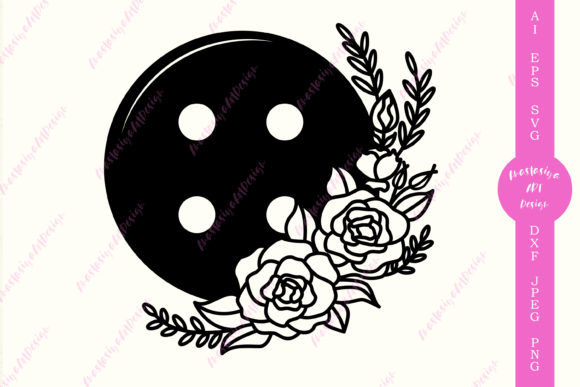
At its core, this asset category consists of digital illustrations depicting buttons adorned with floral motifs, often accompanied by sewing-related elements like needles, thread spools, or fabric swatches. Unlike physical embellishments, these are strictly digital items ready for immediate download. It is important to note that nothing physical will be mailed; the product exists entirely as data. Upon purchase, users receive a ZIP file containing multiple format variations designed to ensure compatibility across different platforms and hardware.
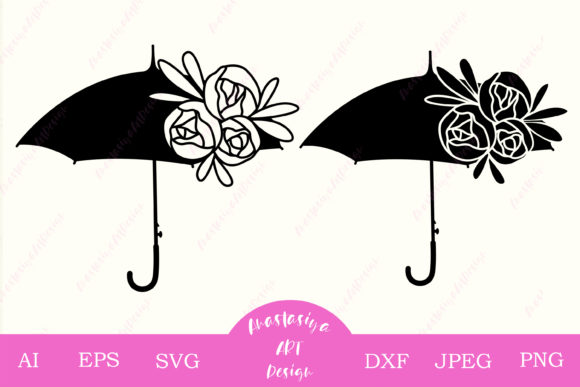
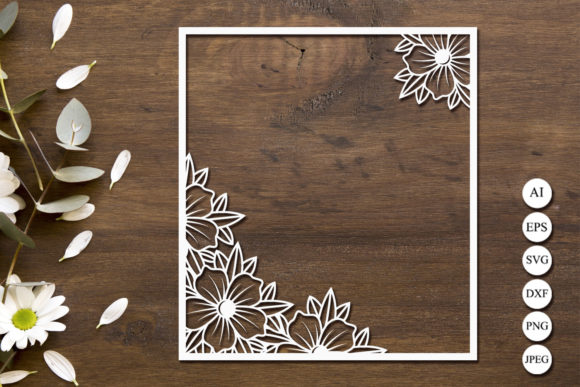
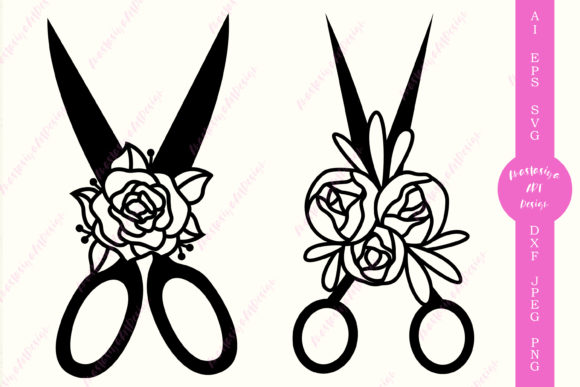
The primary value proposition lies in the versatility of the file types included. A comprehensive bundle typically contains SVG, DXF, AI, EPS, PNG, and JPEG files. The vector formats (SVG, DXF, AI, EPS) allow for infinite scaling without loss of quality, while the raster formats (PNG, JPEG) provide high-resolution imagery at 300 DPI for print or web use. All vector files are editable in size and color, allowing users to customize the palette to match specific branding or project themes.
Technical Compatibility and Software Requirements
Before acquiring floral button sewing clipart, verifying technical compatibility is the most critical step in the decision-making process. While the inclusion of multiple formats suggests broad accessibility, not all software interprets these files identically. Users must make sure their software and machine accepts these formats specifically.
- Cutting Machine Users: For those utilizing Cricut, Silhouette, or Brother machines, SVG and DXF are the industry standards. SVG is generally preferred for Cricut Design Space due to its layer retention, while DXF is often necessary for the basic edition of Silhouette Studio. Verify that your machine’s firmware supports the specific version of the vector file provided.
- Graphic Design Software: Adobe Illustrator, CorelDRAW, and Inkscape users will rely on AI, EPS, or SVG files. These formats preserve the mathematical paths that define the artwork, enabling precise editing of anchor points and color fills.
- Raster-Based Editors: For users working in Photoshop, Procreate, or Canva, the high-res 300 DPI PNG with a transparent background is the most functional asset. This ensures clean compositing over other designs without requiring manual background removal.
If your current workflow relies exclusively on proprietary software that does not support standard vector imports, this digital download may require additional conversion tools or software upgrades to be fully utilized.
Benefits of Digital Vector Assets
Selecting digital floral button sewing clipart over physical alternatives or generic raster images offers distinct advantages for production-oriented workflows. The primary benefit is scalability. Because the vector files are editable in size and color, a single design can be resized from a 1-inch garment tag to a 12-inch wall decal without pixelation. This flexibility eliminates the need to purchase multiple size variations of the same artwork.
Additionally, the immediate availability of these digital items streamlines project timelines. There is no shipping delay, and the absence of watermarks on the final downloaded images ensures professional results instantly. The inclusion of a transparent background PNG further reduces post-processing time, as users can integrate the clipart directly into complex layouts without spending hours masking edges. For commercial creators, this efficiency translates directly to reduced labor costs per unit.
Tradeoffs and Practical Considerations
Despite the advantages, there are inherent tradeoffs to consider when evaluating this type of digital asset. The requirement to extract files from a ZIP format adds a preliminary administrative step. Users unfamiliar with file management may find this cumbersome, particularly on mobile devices or tablets where unzipping requires third-party applications. Furthermore, because these are digital items, there is no tactile verification of the design prior to use. Color accuracy can vary significantly between screen displays and final printed or cut outputs, necessitating test runs before committing to large-scale production.
Another consideration is the learning curve associated with vector editing. While the files are technically editable, modifying colors or resizing specific elements within a composite SVG requires proficiency in vector software. Users expecting a "plug-and-play" experience may find themselves limited to using the designs exactly as provided if they lack the skills to manipulate layers and paths effectively.
Situational Fit: When to Choose This Asset
Floral button sewing clipart is a strong fit for specific use cases where the intersection of vintage aesthetics and digital fabrication is required. It is particularly well-suited for:
- Custom Apparel and Textiles: Creating heat transfer vinyl (HTV) designs for sewing-themed tote bags, aprons, or quilting guild merchandise.
- Paper Crafting: Designing layered cardstock elements for scrapbooking or greeting cards where the intricate details of floral buttons add depth without the bulk of real buttons.
- Digital Stationery: Incorporating high-res PNGs into digital planner stickers or printable journal pages where transparency and resolution are paramount.
- Branding for Craft Businesses: Utilizing editable vectors to create cohesive logos or packaging inserts for Etsy shops specializing in handmade fiber arts.
In these scenarios, the ability to customize color and scale outweighs the initial setup effort, providing a cost-effective alternative to commissioning custom illustrations.
When Alternatives May Be Preferable
Conversely, there are situations where floral button sewing clipart may not be the optimal solution. If the end goal requires genuine texture, weight, or three-dimensionality, digital representations cannot replicate the physical presence of actual buttons and embroidery. For heirloom quilts or luxury garment construction, sourcing physical vintage notions remains superior.
Additionally, if a user lacks access to compatible cutting machines or vector editing software, the utility of the SVG, DXF, AI, and EPS files diminishes significantly. In such cases, purchasing pre-made physical stickers or raster-only clipart bundles optimized for basic word processors might offer better value and lower friction. Finally, for projects requiring photorealistic imagery rather than illustrative stylization, stock photography of real buttons would yield more authentic results than vector art.
Making the Final Decision
Evaluating floral button sewing clipart requires balancing creative vision against technical reality. Prospective users should audit their software capabilities and confirm they can successfully open and manipulate ZIP, SVG, DXF, AI, EPS, PNG, and JPEG files before acquisition. The decision should hinge on whether the editable nature of the vectors and the convenience of immediate digital delivery solve a specific production bottleneck. When the project demands scalable, customizable, and watermark-free sewing aesthetics, and the user possesses the requisite technical infrastructure, this digital asset category serves as a highly efficient creative tool. However, for those seeking tactile authenticity or lacking vector-compatible workflows, exploring physical or raster-based alternatives will likely result in greater satisfaction and fewer technical obstacles.