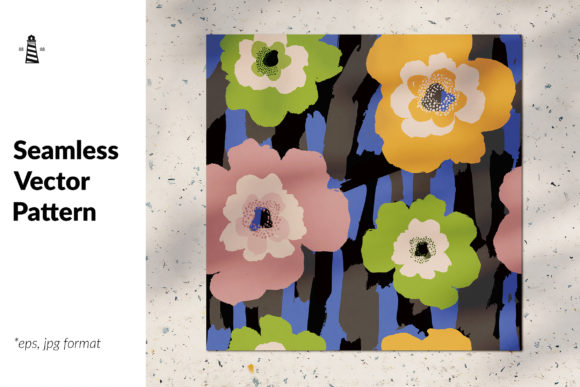
Integrating Floral Seamless Pattern Design into Professional Creative Workflows
Floral seamless pattern design serves as a foundational element in visual communication, bridging the gap between raw artistic illustration and functional commercial application. For professionals ranging from packaging designers to digital marketers, understanding this asset type is less about appreciating botany and more about mastering surface design efficiency. A high-quality floral seamless pattern, particularly one featuring modern exotic jungle fruits and plants in vector format, acts as a scalable texture that can define brand identity without requiring bespoke illustration for every single touchpoint. When integrated correctly into a production pipeline, these patterns reduce turnaround times while maintaining a premium aesthetic.
The specific inclusion of an EPS 10 file format in your download package signals professional utility. Unlike raster images that degrade when resized, vector-based floral seamless pattern designs allow for infinite scaling and color manipulation. This technical specification ensures that the same asset used for a small business card can be repurposed for large-format trade show banners or textile printing without loss of fidelity. Understanding how to leverage this flexibility is key to maximizing return on investment for creative assets.
Strategic Asset Preparation and File Management
Before opening Adobe Illustrator or applying a pattern swatch, effective workflow management begins with proper asset preparation. Downloading a vector pack containing modern exotic jungle fruits and plants is only the first step. Professionals must establish a systematic approach to organizing these resources to prevent bottlenecks during active projects.
- Color Profile Verification: Immediately check whether the EPS 10 file is set to CMYK or RGB. Exotic fruit illustrations often utilize vibrant greens and yellows that shift significantly between color spaces. Converting early prevents unexpected output issues later in the print or digital publishing process.
- Layer Structure Audit: Open the vector file to assess layer organization. Well-constructed floral seamless pattern designs separate background elements, foreground foliage, and accent fruits onto distinct layers. This separation allows for rapid customization, such as removing specific fruits to create a lighter variation for web backgrounds while keeping the full density for packaging.
- Swatch Library Creation: Rather than copying and pasting artwork repeatedly, save the pattern as a native swatch within your design software’s library. This centralizes the asset, ensuring consistency across multiple documents and team members.
- Metadata Tagging: If you manage a large digital asset library, tag the file with semantic keywords like "tropical," "vector," "seamless," and "EPS 10." This reduces search time during high-pressure production cycles.
Preparation also involves understanding the limitations and capabilities of the EPS 10 standard. While highly compatible, some older versions of design software may interpret complex gradients or transparency effects differently. Testing the file in your specific environment before starting a major campaign ensures technical compatibility and avoids mid-project rework.
Application Across Diverse Project Phases
Floral seamless pattern design functions differently depending on where it sits in the project lifecycle. It is not merely a decorative afterthought; it can drive decisions during planning, execution, and post-production refinement.
Pre-Production and Concepting
During the mood boarding phase, a modern exotic jungle illustration provides immediate tonal context. Instead of spending hours sketching custom flora to convey a "fresh" or "organic" vibe, designers can apply the vector pattern to mockups to test visual density. This rapid prototyping helps stakeholders visualize the final outcome before committing to expensive custom illustration hours. The seamless nature of the design allows for quick tiling over large areas, giving a realistic preview of shelf presence or website headers.
Active Production and Customization
In the execution phase, the vector format becomes the primary advantage. Because the floral seamless pattern consists of mathematical paths rather than pixels, you can globally adjust colors to match specific brand guidelines. Need to change a lime green leaf to match a corporate Pantone? With vector assets, this is a global recolor operation taking seconds, not hours of manual painting. Furthermore, the ability to scale individual elements within the pattern means you can adapt the same source file for disparate formats—shrinking motifs for stationery or enlarging them for environmental graphics—while maintaining crisp edges.
Post-Production and Repurposing
After a project launches, the floral seamless pattern remains a valuable reusable asset. Marketing teams can extract individual exotic fruits from the vector file to use as standalone icons or social media stickers. Educators and content creators can isolate plant elements for diagrammatic overlays. The initial purchase of an EPS 10 vector pack effectively creates a modular design system that extends far beyond the original scope of the pattern itself.
Technical Integration with Design Ecosystems
A floral seamless pattern does not exist in a vacuum. Its value is determined by how well it interacts with other tools and platforms in your stack. Modern workflows often require moving assets between vector editors, layout programs, and 3D rendering software.
When working in layout applications like InDesign or Affinity Publisher, link to the EPS file rather than embedding it whenever possible. Linking keeps document file sizes manageable and allows you to update the master pattern file externally; changes automatically propagate to all linked instances. For web designers, converting the vector pattern to SVG or CSS code ensures fast load times and retina-ready display. The clean geometry of vector jungle illustrations typically translates exceptionally well to SVG optimization, unlike complex photographic textures.
For product designers using 3D software like Blender or C4D, the vector pattern can serve as a displacement map or alpha mask. The high contrast and clear definition of exotic fruit shapes make them ideal for creating embossed packaging effects or textured surfaces in product visualization. This cross-disciplinary utility underscores why investing in high-quality vector sources is superior to relying on flat raster images.
Quality Control and Output Considerations
Maintaining quality when utilizing floral seamless pattern design requires vigilance regarding reproduction standards. Vector files are resolution-independent, but the output medium has physical constraints.
- Check Seam Integrity: Even professionally made patterns can develop visible seams when scaled drastically or printed on textured substrates. Always print a physical proof at actual size to verify the repeat is truly invisible.
- Monitor Color Gamut: Exotic jungle themes often rely on saturated cyans and magentas. Verify these colors fall within the printable gamut of your chosen press or printer. Use soft-proofing features to identify out-of-gamut colors before production.
- Validate Complexity: Highly detailed vector patterns with thousands of anchor points can cause RIP (Raster Image Processor) errors in commercial printing. Simplify paths or flatten transparency if you encounter processing delays.
- Licensing Compliance: Ensure your usage aligns with the license terms. While the EPS 10 file is technically yours to edit, restrictions may apply to resale, NFT creation, or trademark registration. Documenting permitted uses prevents legal friction down the line.
Enhancing Workflow Efficiency Through Standardization
Ultimately, incorporating floral seamless pattern design into your routine is about building efficiency through standardization. By establishing a curated library of vetted vector assets, you reduce the cognitive load associated with sourcing new visuals for every campaign. The modern exotic jungle aesthetic offers a versatile middle ground—distinctive enough to stand out, yet organic enough to pair with various typography styles and color palettes.
Professionals who treat these patterns as configurable components rather than static backgrounds unlock significant productivity gains. The EPS 10 format supports this mindset by providing editable access to the underlying geometry. Whether you are a freelancer juggling multiple clients or an in-house designer managing a comprehensive brand system, the ability to rapidly deploy, customize, and repurpose high-quality vector patterns streamlines the path from concept to delivery. Focus on integrating these assets systematically, and they will become reliable workhorses in your creative arsenal, delivering consistent quality across every application.