Beautiful Floral Wedding Invitation Card: Integrating Design Assets into Your Production Workflow
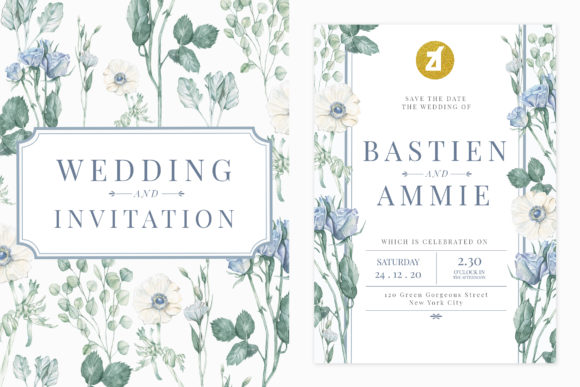
A beautiful floral wedding invitation card serves as the initial touchpoint for any matrimonial event, setting the aesthetic tone and communicating essential logistical details. For designers, print shop owners, and DIY couples, this asset is more than just a pretty image; it is a functional component of a larger project management workflow. When utilizing a professional template set, the focus shifts from starting with a blank canvas to managing assets, ensuring technical compatibility, and executing a consistent visual identity across multiple deliverables. Understanding how to leverage these files effectively transforms a simple design purchase into a streamlined production process that saves time and ensures high-quality output.
The Role of Template Sets in Creative Workflows
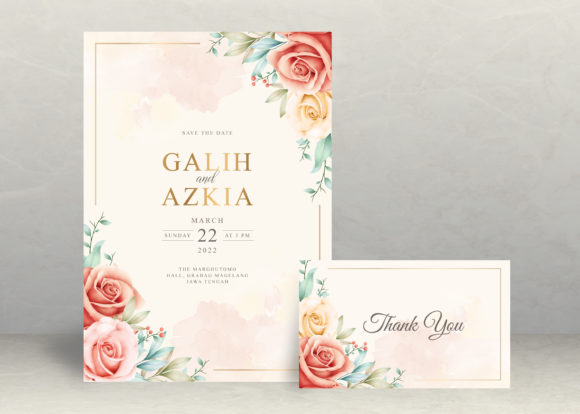
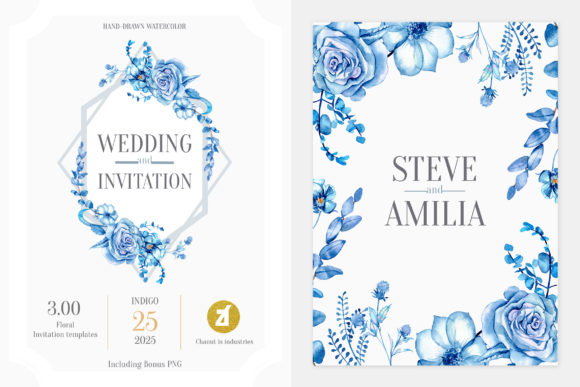
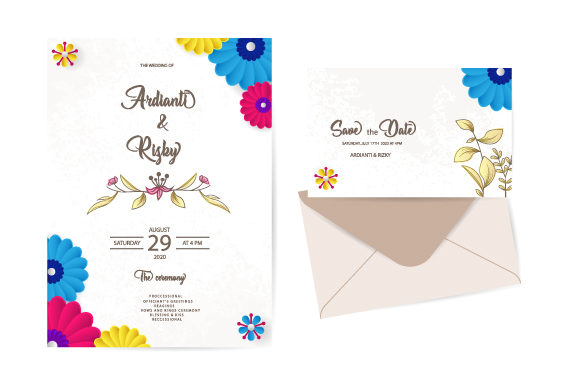
In the context of professional design or personal event planning, a beautiful floral wedding invitation card template set acts as a foundational style guide. Rather than treating the invitation as an isolated task, successful implementation requires viewing it as the anchor for a broader married design template system. This approach ensures that the typography, color palette, and floral motifs established in the primary invitation carry through to save-the-dates, RSVP cards, menu inserts, and thank-you notes. This consistency is vital for brand cohesion in commercial printing services and for creating a polished, curated experience in personal weddings.
For freelancers and small business owners offering stationery services, these templates reduce the cognitive load associated with custom illustration. The pre-designed layout allows you to focus on client communication, content accuracy, and customization rather than structural composition. By integrating a ready-made design template into your asset library, you create a repeatable framework that accelerates turnaround times without sacrificing the bespoke feel clients expect. The floral elements provide immediate visual interest, while the structured layers within the file allow for rapid adaptation to different text lengths and formatting requirements.
Evaluating File Formats for Technical Compatibility
The utility of a beautiful floral wedding invitation card depends heavily on the technical specifications of the source files. A comprehensive template set typically includes AI, EPS, and JPG formats, each serving a distinct purpose in the production pipeline. Understanding when and how to use each format prevents bottlenecks during the editing and printing phases.
- Adobe Illustrator (AI): This is the master source file intended for deep customization. It retains all vector paths, editable text layers, and swatch libraries. Use this format when you need to alter the floral arrangement, adjust the color scheme to match specific Pantone references, or resize the design without quality loss. It is the industry standard for print design and offers the highest level of control.
- Encapsulated PostScript (EPS): This universal vector format ensures cross-platform compatibility. If you are collaborating with a print vendor who uses CorelDRAW or older versions of Illustrator, the EPS file guarantees that vectors remain crisp and scalable. It is also the preferred format for placing the invitation design into other layouts, such as a website mockup or a social media announcement template.
- JPEG (JPG): While not editable in a vector sense, the high-resolution JPG serves critical proofing and digital distribution functions. Use this file for quick client approvals, email previews, or uploading to online marketplaces. It provides an immediate visual reference that does not require specialized software to view, facilitating faster feedback loops before finalizing the print-ready AI or EPS files.
Pre-Production Preparation and Asset Organization
Before opening the beautiful floral wedding invitation card template, establish a rigorous file management system. Disorganized assets lead to version control errors and broken links, particularly when working with complex floral illustrations that may include linked images or embedded fonts. Create a dedicated project folder structure that separates source files, exported proofs, font licenses, and final print outputs. This preparation phase is especially important for entrepreneurs managing multiple client projects simultaneously.
Font management is another critical pre-production step. Template sets often specify particular typefaces to achieve the intended elegant aesthetic. Verify that you have the appropriate commercial licenses for these fonts before beginning customization. If the required fonts are unavailable, identify suitable alternatives beforehand to maintain the design’s integrity. Substituting a script font with a drastically different weight or x-height can disrupt the balance of the floral composition, requiring significant layout adjustments. Addressing these dependencies early streamlines the actual design execution.
Customization Strategies for Print Design Efficiency
When customizing a married design template, prioritize non-destructive editing workflows. In Adobe Illustrator, utilize layer groups to separate background florals, decorative borders, and text fields. Locking the background layers prevents accidental selection or movement while adjusting copy, reducing frustration and rework. For users adapting a beautiful template design for different paper sizes, use artboards to manage multiple variations within a single document. This allows you to visualize the invitation, RSVP, and details card side-by-side, ensuring alignment and spacing consistency across the entire suite.
Color management requires equal attention. Floral designs often rely on subtle gradients and spot colors that may shift unexpectedly between screen and print. Convert RGB swatches to CMYK early in the process if the final output is offset or digital printing. For professional printers, consider using global swatches or Pantone libraries defined within the AI file. This allows you to update a single color definition and have those changes propagate instantly throughout the entire floral motif, maintaining harmony and saving hours of manual recoloring.
Quality Control and Pre-Press Verification
A beautiful floral wedding invitation card must be technically flawless to translate well onto physical media. Implement a systematic quality control checklist before exporting final files. Verify that all text has been outlined or that fonts are properly embedded if sending to a third-party printer. Check bleed settings to ensure floral elements extending to the edge will trim correctly without leaving white borders. Confirm that image resolution meets the 300 DPI minimum for print clarity, particularly if the template incorporates raster textures alongside vector flowers.
Proofing should extend beyond the screen. Print a test copy at actual size on the intended paper stock to evaluate color accuracy, legibility, and scale. Floral patterns that look airy on a monitor may appear dense or muddy when printed on textured cardstock. This physical verification step catches issues that digital proofs miss, preventing costly reprint runs. For business owners, this stage also serves as an opportunity to photograph the sample for portfolio use, turning a production task into a marketing asset.
Post-Project Archiving and Future Application
The value of a beautiful floral wedding invitation card template set extends beyond a single project. After completing the immediate task, archive the customized files in a way that supports future reuse. Strip out client-specific text and proprietary information to create a sanitized master version. Tag the file with relevant metadata—style, season, color family, and orientation—to make it searchable in your asset library. This transforms a one-time purchase into a long-term resource for future clients or personal projects.
Consider how the floral elements can be repurposed independently. Extract individual blossoms or leaf arrangements from the AI file to create standalone decorative assets for menus, place cards, or even web graphics. This modular approach maximizes the return on investment from the template set. By treating the beautiful template design as a flexible toolkit rather than a static product, you integrate it deeply into your creative ecosystem, enhancing both efficiency and creative range across diverse applications.
Integrating Digital and Physical Touchpoints
Modern workflows often require bridging physical print design with digital communication. The JPG and EPS files included in the template set facilitate this hybrid approach. Use the high-resolution artwork to create matching social media announcements, wedding website headers, or digital RSVP interfaces. Maintaining visual continuity between the tangible invitation and digital platforms reinforces the event's theme and provides guests with a cohesive experience.
For educators and bloggers teaching design principles, these templates serve as excellent case studies. Deconstructing the layer structure, color theory, and typographic hierarchy of a professional married design template offers practical learning opportunities. Students can analyze how negative space balances intricate floral details or how font pairing influences readability. This educational application adds another dimension to the asset’s utility, demonstrating that a beautiful floral wedding invitation card is not merely a consumer product but a versatile tool for skill development and professional growth.